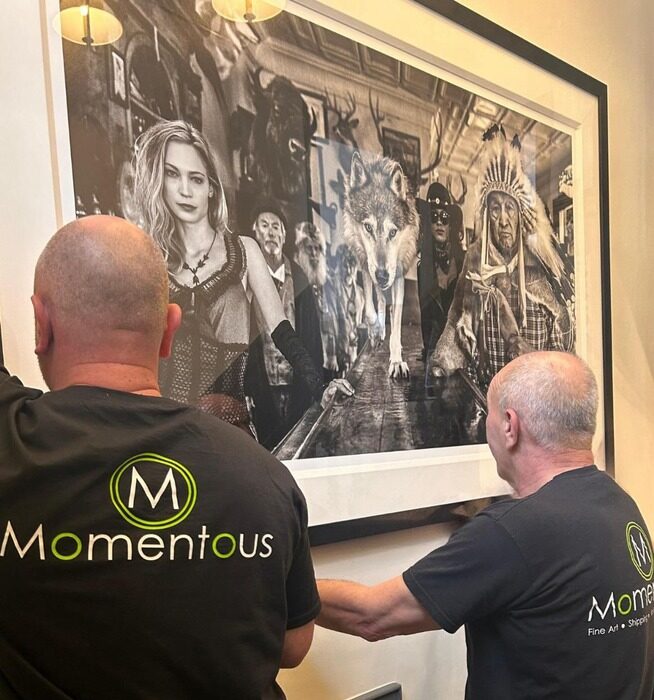
Fine Art Logistics in London — The Complete Guide (2026 Edition)
Home to major, internationally renowned and thriving museums and galleries, auction houses, and private exhibitions with histories spanning centuries, London is firmly the beating heart of pristine artwork collections. Being such a widely recognised place for fine art pieces both big and small, London demands a high standard of fine art logistics, going well beyond courier, delivery and freight services.
If you’re coordinating a touring artwork exhibition, relocating a private collection, or preparing consignments for a public display, the logistical chain of fine art requires specialist knowledge, expertise, equipment, and support at every stage.
This comprehensive guide covers everything that museums, galleries, exhibitors and collectors need to know about fine art logistics in London in 2026 and beyond, exploring important aspects such as crating, climate control, insurance, AV installation, customs clearance, and more.
What Makes Fine Art Logistics Different?
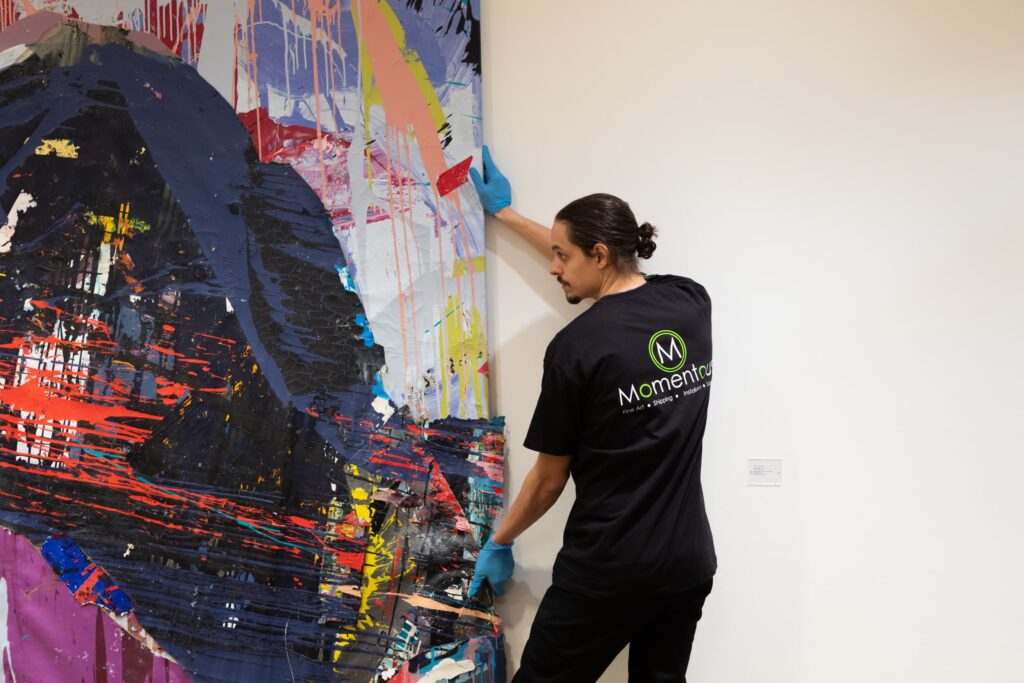
Contrary to popular belief, fine art logistics as a process shares extraordinarily little with standard commercial logistics. Yes, there are vehicles and drivers, but the entire end-to-end logistics process for fine art handling, from the initial reports to the final placement, demands expertise, selection and use of correct packing materials. This is to preserve the integrity, value and condition of the artwork, while offering the client complete reassurance and peace of mind.
Artwork is invariably irreplaceable. Cracked sculptures, damaged paintings, warped photographs, and moisture-laden pieces cannot just be replaced or reimbursed like a piece of contemporary chinaware or porcelain. The entire operational model of any credible fine art logistics provider relies on this fundamental ethos: any respectable provider will uphold meticulous standards of handling from start to finish.
At Momentous Relocation, our fine artwork logistics service begins with a thorough on-site assessment by a professional art logistics specialist. This is so we can ensure that every decision, as far as packing, transport, handling, delivery and installation are concerned, is made with the utmost care and that explicitly satisfies the needs of the work and client.
Professional Crating for Fine Art Pieces
Custom crating is the first and most important layer of protection for works in transit. Off-the-shelf packaging is rarely appropriate for fine art, whereas a bespoke crate is engineered around the specific dimensions, weight, material fragility and environmental sensitivity of the work it contains.
There are a handful of categories of crating for fine artwork:
- Travel frames and soft-pack solutions suit lower-risk, flat works for shorter journeys within the UK.
- For international shipping and logistics, high-value works, or anything with structural fragility, a fully enclosed timber crate lined with archival foam and a vapour barrier is recommended and standard for the industry.
- Crates for climate-sensitive works may also incorporate silica gel packets or active humidity regulation to buffer the internal environment during transit.
The type of crating solution(s) chosen will depend on:
- The medium (oil, acrylic, works on paper, photography, mixed media)
- The size and weight of the work
- Its destination
- The mode of transport (road, air freight or sea freight)
- Lead times between delivery and installation
Sculpture presents particular complexity, as they are often irregularly shaped and occasionally brittle and heavy, and thus require custom internal supports that prevent movement under vibration and shock loading without applying pressure to delicate surfaces.
Be mindful of timeframes for delivery, because complex custom crates for fragile or large artwork can take several days to construct correctly. Rushing to build your crate and handle your art piece(s) is a risk not worth taking if it could compromise the integrity and value.
Preserve Artwork Integrity With Proper Climate Control
Temperature and relative humidity (RH) are the two environmental variables most likely to cause irreversible damage to fine art in transit. Oil paintings and wooden panels are particularly vulnerable to RH fluctuations, and if unaddressed, this could cause expansion and contraction in the support, which can then lead to cracking, flaking and delamination over time. For highly pristine photographs and paper works, they are particularly sensitive, and careful attention must be paid to ensure they are safe in transit.
Industry guidance from major institutions typically recommends maintaining a stable environment of 18–21°C and 45–55% RH for most fine art. In practice, transportation with the help of proper climate-controlled vehicles, not simply those with air-conditioning, is the go-to solution. Momentous operates well-maintained, professional climate-controlled and secure transportation vehicles designed specifically for this purpose.
For London art collections moving between venues, climate control during road transport is generally manageable. International air freight, however, is less easy to control and introduces more variables, including:
- Cargo hold environment
- Airport transit time
- Temperature differentials during loading, unloading, and further transit
Climate-buffering crates can work well here, acting as a passive thermal and humidity buffer between the controlled vehicle(s) and the ambient or otherwise more humid, warm or even colder conditions at either end of the journey.
Long-term or interim specialist storage is equally important for collections not currently on display. A dedicated fine art storage facility, like the ones that we utilise at Momentous, will maintain controlled environmental conditions, appropriate racking and security, and regular condition monitoring.
Fine Art Customs and International Shipping
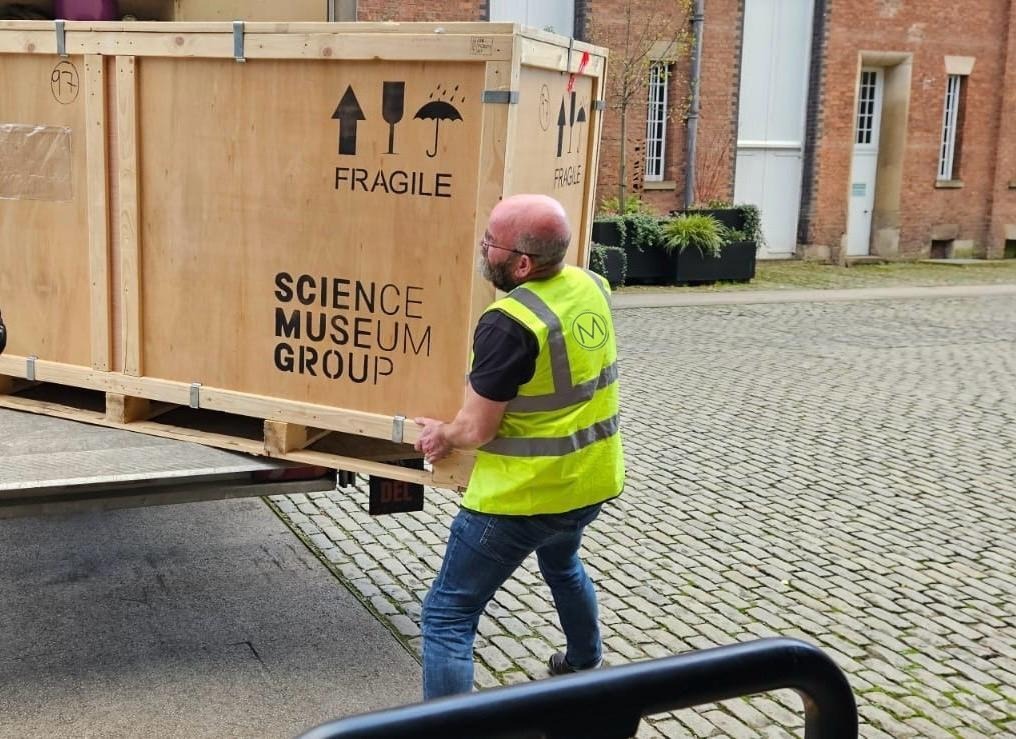
For London galleries, auction houses and collectors working across borders, customs compliance remains a constant challenge of fine art logistics. Shipments between the UK and European Union member states have, understandably, become more complex following Brexit. UK galleries must now provide full customs documentation prior to shipments, which can add an element of administrative complexity to journeys that were, at one point, much easier.
The key documents for international fine art shipments typically include:
- A detailed commercial invoice
- A packing list with a clearly defined breakdown of works
- A certificate of origin
- Where applicable, a CITES permit for works, which incorporates protected materials such as tortoiseshell, ivory or certain timbers
This isn’t even accounting for VAT treatment for imported artworks, which presents its own share of challenges, especially where works are sold in transit or change hands in different jurisdictions. This is where the presence and involvement of a specialist art or customs broker at the planning stage is vital, particularly if shipping internationally.
For art fairs and events, quite common occurrences in London all year-round, coordination with venue logistics teams, bonded warehousing and tight scheduling is imperative. Momentous is proud to work with numerous auction houses, exhibitors and galleries all around the capital, handling shipping, collection and installation of artworks in all shapes and sizes, acting as a single point of contact throughout the full logistical chain.
Taking Out Fine Art Move Protection
Fine art move protection matters enormously and is not as clear-cut as standard transit or contents insurance. When a claim arises, understanding your fine art coverage pays dividends.
Specialist fine art move protection policies are mostly written on the basis of ‘agreed value,’ meaning the insured amount is agreed at the outset, rather than disputed at the point of loss or damage. Most policies cover the work from the moment it leaves its current affixed location, through transit, handling, storage, and final installation.
Before any movement, it’s vital to ensure you have documented condition reports with photographs, supported by a current valuation from a qualified appraiser. Many institutions and private collectors underestimate the importance of pre-transit condition reporting. Without it, attributing any new damage specifically to transit is difficult, and insurers may dispute claims on that basis.
Comprehensive coverage is included as standard within a well-structured fine art logistics service, like that provided by Momentous. Confirm with your logistics provider exactly what their carrier’s liability covers and where it ends, and review this against your own fine art policy to ensure there are no gaps, particularly for high-value or fragile works that may be prone to succumbing to damage.
AV and Electrical Integrations for Fine Art Collections
Many contemporary art collections incorporate audio-visual (AV) works, such as:
- Video installations
- Light sculptures
- Sound pieces
- Interactive digital works
- Immersive experiences
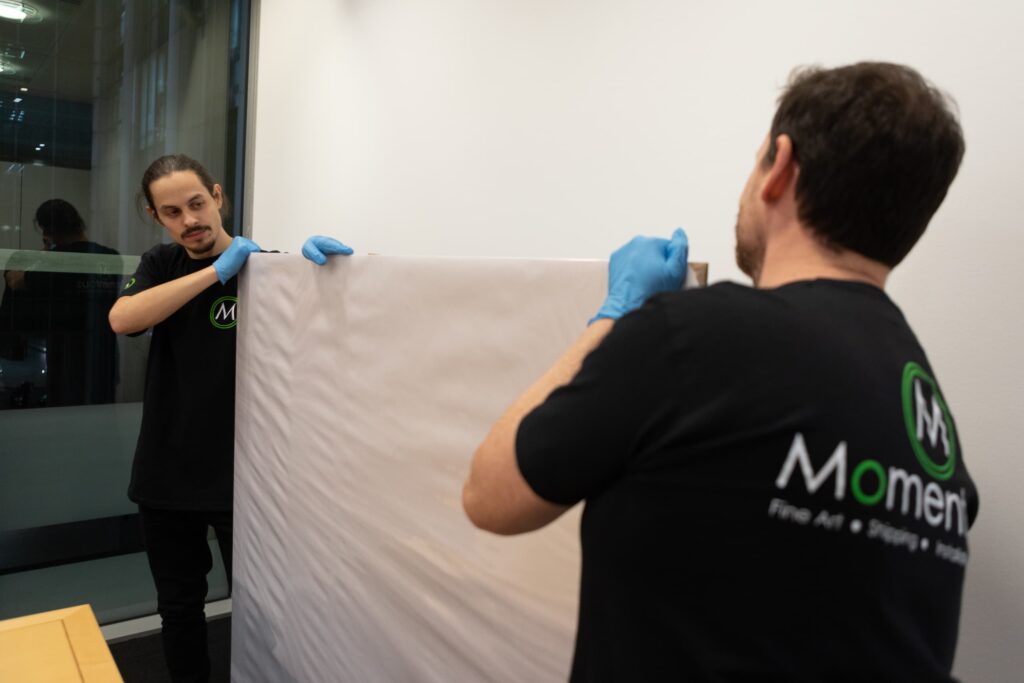
The logistics of AV art extend well beyond physical transport. Mounting, cabling, calibration and technical commissioning all require specialist skills that differ from those needed for flat or sculptural art.
Momentous offers packing, shipping and installation for AV and electrical installations, recognising that many corporate curators, hotel collections and contemporary galleries now hold significant quantities of media-based work.
For complex multi-room installations or site-specific commissions, an advance visit by the installation team is strongly advisable. Understanding the architectural constraints of a space before equipment arrives avoids costly delays and prevents improvised solutions that may compromise the artist’s intent.
Working with Art Specialists in London
Museums and public galleries operate within strict regulatory and institutional rules, which include specifications for condition reporting, financial agreements, borrower requirements, facility status, and so on. Having a trusted, reputable fine art logistics partner that is experienced in working in this sector offers complete peace of mind, especially knowing that they’ve operated within these protocols, and adept at liaising with the relevant parties.
Works may need to move at short notice, be installed to a tight vernissage deadline, then collected and returned or redirected to a buyer. Reliability and communication are as important as manual handling skills and proper climate control in transit.
Corporate curators in London, perhaps managing commercial collections, face specific challenges in access management, working-hours constraints, and the need to coordinate with wider facilities management and logistics teams. Momentous supports corporate curators with storage, installation, and national or international transportation between collections and pieces.
Private collectors often require a more discreet and personal service. Whether acquiring at auction, receiving a commissioned work or relocating a collection as part of a property move, collectors benefit from a logistics partner who understands both the financial and emotional significance of the works in their care. This overlaps naturally with interior design logistics, where fine art forms part of a wider FF&E project.
Choosing a Fine Art Logistics Partner in London
The questions worth asking any prospective logistics provider centre on experience, accreditation and process.
Consider confirming the following:
- How long have they been working specifically with fine art?
- Do their technicians receive specialist art handling training?
- What climate-controlled vehicle capacity do they have
- How do they document condition before and after transit?
- Can they manage customs documentation for international shipments?
With over 40 years of specialist logistics experience, a UK-wide network of logistics centres and established global partnerships, Momentous Relocation provides the full range of services that London’s art community requires. From bespoke crating and specialist transportation through to secure storage and complete installation, the team is equipped to manage every stage of a fine art logistics project, however complex or difficult it may seem on the surface.
To discuss your requirements or arrange a no-obligation quote, contact Momentous today.